
Preparing for Pregnancy
In this page, we will discuss ways you can prepare for pregnancy both physically and spiritually.
"He will love you, bless you, and multiply you. He will also bless the fruit of your womb and the fruit of your ground, your grain and your wine and your oil, the increase of your herds and the young of your flock, in the land that he swore to your fathers to give you. You shall be blessed above all peoples."
Finding a Doctor & Discovering your Truth
This is one of the first things you should start researching. Some things to look into immediately are:
What is your ideal birth plan?
Doula?
Common medical interventions/policies in the hospital you plan to deliver.
You should be looking into how your hospital typically handles labor and delivery. Do you get to labor, delivery, and recover in the same room, or are they wheeling you all over the hospital? Will your provider urge you to induce? Will your provider recommend a membrane sweep? Will they be frequently offering epidurals? Are they a teaching hospital? Continuous fetal monitoring during labor? Assisted vaginal delivery? Episiotomy? How does your provider handle breech or twin delivery? These are crucial to understand and discuss with your partner before speaking to your provider. Do you want the least amount of medical intervention, or do you want an epidural the second you feel contractions? Look into the risks and effects of your choices and then make sure you find a provider that supports your decisions.
https://www.pregnancybirthbaby.org.au/interventions-during-labour
The C-section rate with your provider.
In the United States, we average 1 in 3 births are C-sections. Half of those cesarean sections are labeled as an emergency. As you look into this, you may find that to be B.S., but that is for you to decide. I believe that C-sections can be life-saving and are necessary, but I also feel they are abused by Doctors who scare patients into making decisions when they are not receiving informed consent.
https://jamanetwork.com/journals/jama-health-forum/fullarticle/2794350
Ask the potential provider if they will allow you to be mobile during labor and will they allow you to choose your delivery position.
As you discover more about labor and delivery, you will find that when you receive an epidural, you limit the movement you can make and will be forced to deliver from limited positions. You will also find many women like to deliver in whatever position feels good to them, as they should. You will want to make sure your provider is comfortable with you delivering in other positions besides lying on your back.
Do you want to use a birthing tub? Is that offered at your hospital?
What does the delivery room look like at your hospital or center? Is a birthing tub available for your use? Is the bed at the center of the room, or is there space for movement?
Birthing center or home birth as an option?
If you determine you want to give birth at home with a midwife, you are able usually able to make this choice later in pregnancy if you decide. If you have any interest in using a birthing center like I did, you have to call them the first business day after finding out you are pregnant. I unfortunately was too late to the game and am not able to use a birthing center. This is a tough situation to be in if you are looking for more of a physiological birth, which is significantly harder at a hospital.
What can you expect from each prenatal appointment?
Ask your provider for a breakdown or a document that discusses what will happen at each appointment. This way, you can be prepared with research for what you want and what you want to deny. It also makes you less nervous to discuss other options and less likely to be pressured into making a decision. You can always tell them, "I would like to look into this more before moving forward," or simply "No, thank you".
TDAP, GBS, Hep B, Erythromycin eye ointment, Vitamin K Shot, Gonorrhea & Chlamydia test, Genetic Carrier Screening, NIPT.
Many providers will pressure you into getting vaccines during pregnancy, like the Tdap vaccine to prevent whooping cough.
The article below shows that much of vaccine and pharmacological testing is not done on pregnant women, therefore limiting the evidence that vaccines are safe for pregnant women.
https://www.sciencedirect.com/science/article/abs/pii/S0264410X23012598
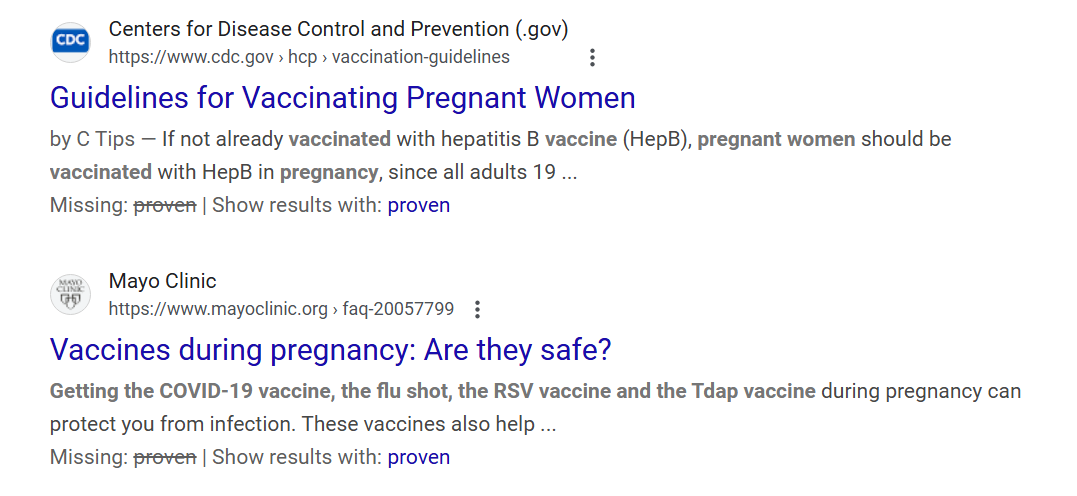
Erythromycin Ointment is given to babies directly after birth to prevent STIs and bacteria from getting transmitted to your baby. This is unnecessary in my opinion since the risk of them being transmitted since there is a 1% chance you transfer bacterial infections to your baby, and a small risk of passing STIs to your baby if you even have them. Most women test negative before labor. The Hep B shot is also given immediately after birth, which is also unnecessary since the Hep B shot is to prevent women who have Hep B from transmitting it to their child. If you tested negative, I would not recommend this. The vitamin K shot is given to prevent hemorrhage in infants. There are oral alternatives that are proven to be safer for your child. I also believe that God created babies with low levels of Vitamin K for a purpose. If you deliver a baby boy and plan on getting him circumcised, you may want to think more about this, but there is plenty of evidence, including the low absolute risk of babies' blood not being able to clot, that proves it is an unnecessary medical intervention.